Showing posts with label cinema. Show all posts

Saturday, 18 June 2011

Movie Mini-Reviews: The Adjustment Bureau, Thor & X-Men: First Class

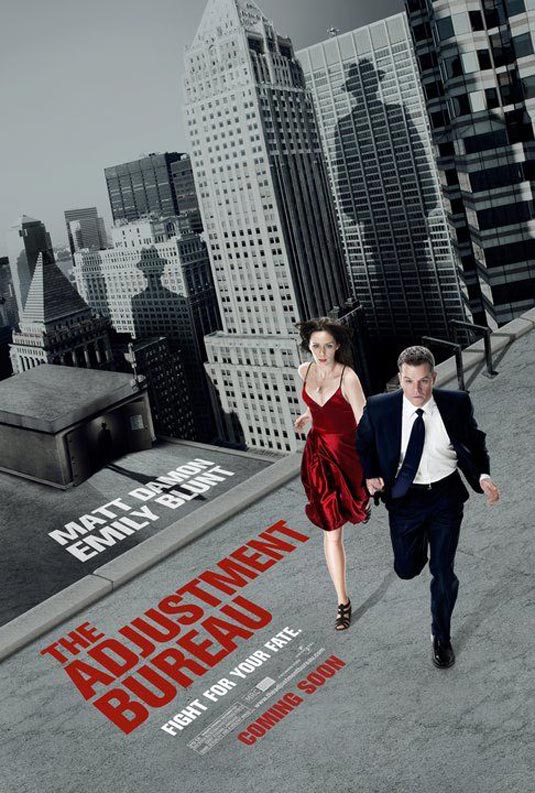
The Adjustment Bureau

Being based on a Philip K Dick short story, I will admit I was surpised that this movie was only 'sci-fi lite' at best. However, as a psychological/romantic thriller,
The Adjustment Bureau is fairly effective. Damon and Blunt do a good job of protraying a couple striving to be together, only to be torn apart by destiny, and the use of New York as a setting fits very well with the narrative. The quasi-religious undertones are a tad contrived, but overall this isn't a terrible flim. There are definitely better Philip K Dick adaptions, but equally there are others that are much worse.

Try this is if you like: The Time Traveller's Wife, Blade Runner, The Bourne Trilogy
Rating: 3/5

Thor

Going into this movie with no prior knowledge of the Marvel comic book series is not necessarily a bad thing. Thor does a really good job of bringing the viewer up to speed with the mythology and background info, without letting it feel exponential or clunky. Although the plot is fairly good, it's the performances that really shine in this film, with Tom Hiddleston deserving special note. Playing the trickster-villain Loki, Hiddleton toys with our empathy, causing the audience to pity him as much as we despise him. Apart from some minor flaws, such as continual and obvious nods towards the upcoming Avengers movie, Thor stands out as one of the best superhero movies this year.

Try this if you like: Iron Man, 300, X-Men
Rating: 4/5


X-Men: First Class

I think it's important to clarify one thing about this film: it is intended to be a reboot - this portrayal of the X-Men characters and story-lines will not marry-up with previous X-Men films. The main strength of this movie is also its main weakness - the subject matter. The film does a great job of telling the origin stories of Magneto and Charles Xavier, but it should have stopped there. Too many other characters are crammed in, and fairly weak characters too. However, the narrative of the movie is solid, making great use of historical events to frame the plot. McAvoy and Fassbender carve out original portrayals of their characters, and Kevin Bacon is an effectively sinister villain (and possibly the only new character with a cool mutant power). Not an awful film - still not sure why all the female characters had to be semi-naked though...

Try this if you like: Wanted, X-Men, Inglourious Basterds
Rating: 3/5 

Monday, 28 February 2011

Underrated: My cult classics

Equilibrium (2002)

I'm a real sucker for dystopian narratives, so it comes as no surprise that this Orwell-inspired sci-fi action flick ticked all the boxes for me. I'm not going to deny that this movie isn't flawed; it wouldn't be a cult classic otherwise. 

There are issues with Equilibrium's plot at points, and the some of the concepts require the viewer to fill in a few gaps to sustain believability. However, I think this film suffered from some poor marketing during its cinematic and dvd release (the tagline didn't relate to the movie at all), and it didn't help that it was seen as a copy of the already popular Matrix movies, due to its similar visuals and themes.

Why do I love this film? The totalitarian imagery throughout is spot-on; you really feel the oppression of the futuristic society, depicted through the drab blocky buildings, the ruthless visored security forces and the quasi-religious iconography. The film's score is a perfect mixture of pumping techno-classical and soft synth-led themes, driving the action and pulling on your emotions. Christian Bale does a fantastic job as John Preston, the troubled cleric struggling to deal with the effect of outlawed emotions whilst carrying out his brutally repressive tasks for the Tetragrammaton. 

And possibly my favourite aspect of the film - the 'gun kata' martial art. Created by the director Kurt Wimmer specifically for this movie, the gun kata combines Western firepower with Eastern skill, leading to some fantastic action set-pieces and setting this movie apart from The Matrix with its drastically different approach to cinematic gunslinging.


30 Days of Night (2007)

At this moment in time we are drowning in vampire-related films, television programmes and literature, explaining why a movie like 30 Days of Night could very easily get lost in the deluge of blood-sucking and pointy teeth. 

Let's start with the issues plaguing this film. Yes, there are some continuity problems (Josh Hartnett's ability to grow stubble whilst no-one else does) and the ending may seem like a bit of a cop-out to some. Also the plot does feel quite jagged at points, jumping forwards quite abruptly.

Onto the good - the film's depiction of vampires. Compared to the grumpy, sparkly undead of Twilight or the CGI zombie-goons of I Am Legend, this movie does a fantastic job of actually making vampires scary. By ultilising effective prosthetics and believable performances, these ghouls actually put a chill down your spine as they hunt their human prey, lusting after their fear as much as their claret. In particular, Danny Huston does a great job as Marlow, the leader of the brood, seeming to almost pity the poor feeble creatures he seeks to ravage.

Although the movie's concepts obviously come from the graphic novel it is based on, these concepts still make the movie worthy of praise. The idea of vampires attacking during a month of darkness is a great approach to the genre, despite being slightly tenuous. Add some really effective music into the mix, and also some great colour-drained snowy settings to splash blood over, and you've got yourself a vampire film that shouldn't be left to sleep in its coffin.

eXistenZ (1999)

David Cronenburg isn't known for creating anything other than controversial cult classics, and this sci-fi thriller doesn't stray away from his track record.

I would personally say that it's the performances that let this movie down for the main part - but then again, maybe certain actors gave bad performances purposefully to demonstrate that the video game at the centre of the film's plot isn't complete? Therein lies the issue; in a movie as metafictional as this, any flaw can be argued to be intentional, making it difficult to assess its worth.

Once you get over the glaring issue above, there is a fantastic plot to be enjoyed here, discussing virtual reality and the increasingly blurred line between mechanisms and organisms in our world today. The bizarre 'organic' gaming pods add an effective 'yuck' factor to the plot, where a computer virus could actually transfer into your own body.

The film's conclusion is its greatest feature. As I'm sure I've said before, I love an unresolved ending. I think this may be why so many people didn't get on with this movie, because it can be difficult when a story doesn't end in neat 'tied-up with a ribbon' Hollywood fashion. I don't want to give anything away, but this movie's ending will either make you laugh out loud at its audacity, or start punching things with annoyance.

If you like cyberpunk, body-horror or role-playing games - ignore what you've heard about this film and give it a chance.

Post your opinions on these movies below or on my twitter/facebook page, and tell me your favourite cult classics.

Tuesday, 30 November 2010

Harry Potter and the Deathly Hallows: Part One - Review


Directed by David Yates, starring Daniel Radcliffe, Emma Watson and Rupert Grint, written by Steve Kloves.

Dark times are coming. All across the land of Britain, men and women huddle in shadowy corners, whispering to one another of the inevitable fate that none of us can elude. Every second draws us closer, ticking away the remaining time before the ominous fear will become reality...when we reach the end of the Harry Potter movie saga!


OK, so that was a bit of a dramatic intro, but it truly is a shame when great film series reaches its conclusion. Think of how you felt when the Lord of the Rings films came to an end (bad example: Return of the King had about fifteen endings); it's a difficult thing to come to terms with. Although the first part of Harry Potter and the Deathly Hallows does bring with it the beginning of the end, it is nonetheless a thrilling and effective adaptation of J.K. Rowling's insanely popular novel.

HP 7: Part One depicts the outbreak of civil war in the wizarding community, forcing Harry, Ron and Hermione to abandon their studies at Hogwarts as they go on the run, Voldemort's Death Eaters hot on their trail. Harry must follow his task of destroying the seven horcruxes, dark magical items created by Voldemort in a bid to gain immortality. This challenge, given to Harry by Professor Dumbledore before his death, will not be an easy one. As they embark upon their quest, confronting the mystery of the Deathly Hallows along the way, the trio will face all kinds of dangers and trials, threatening their lives as well as their friendships.

After re-watching the entire Harry Potter series so far, it's amazing to see how much the three main actors have grown in their skill and ability. I'm guessing that by now they are pretty much best friends in real life anyway, and so it isn't much of a stretch to portray this on screen. However, this doesn't tarnish the performances of Radcliffe, Grint and Watson in anyway, as they draw you into the fraying relationship between Harry and his best friends. However, it's hard to highlight the three leads in this movie as giving the best performances, when the entire cast is a role-call of the cream of British thespians. If I was going to pick one person who shone brightest for me, it would be Jason Issacs, playing disgraced Death Eater Lucius Malfoy. His portrayal of a broken man who knows he has lost his former status and power is chillingly believable, making you almost pity him.

No doubt there will be those who will cry sacrilege at the choices made by screenwriter Steve Kloves and director David Yates when adapting this novel to the screen, but I agree with their decisions for the most part. I especially liked their choice of where to split the book in two, leaving my taste-buds tingling for the next installment. There were a couple of instances where I felt that tricks had been missed and events mishandled, the blunt addressing of Mad-Eye Moody's death being one example. I felt that the pacing of the narrative work really well however, the drawn-out bleak sections of the story having exciting action sequences interspersed at the appropriate points. I my opinion, this is a very faithful adaptation, with some interesting and effective changes made here and there to made the story suitable for the visual medium. For a more detailed summary of my views on book-to-film adaptations, click here.

Visually, HP 7: Part One is spell-binding (I'm really sorry, I had to use it somewhere!). From start to finish you are sucked into the magical world of Rowling's books, with a mixture of incredible visual/special effects and artistic cinematography. Some of the most beautiful moments of the movie are those set in the wild countryside of Britain, which would feel as much at home in an indie arthouse film as in a fantasy blockbuster. Also worth mentioning are the totalitarian themes and imagery used to depict the Ministry of Magic, now infiltrated and controlled by Voldemort's minions, invoking hints of distopian films such as Nineteen Eighty-Four (1984) and Brazil (1985).

One thing I will admit about this, the latest in the Harry Potter saga, is that the film is definitely intended for those devoted to the previous books and films. There isn't much point watching this movie if you haven't seen those that precede it. I would even go as far as saying that you won't completely understand the plot if you haven't read all the books. Some elements of the story, such as the importance of the wizard Gellert Grindelwald, are included with the assumption that the viewer doesn't require a thorough introduction, which may confuse those less familiar with the series. I don't necessarily think this is a flaw however, because this is the seventh installment of the story, meaning there is a little bit too much to recap at this point. Another small disclaimer; don't take young children to see this movie. It is quite scary at points and contains suggestive and adult themes that are unsuitable for younger viewers.

So, to conclude, my high expectations were very much met by Harry Potter and the Deathly Hallows: Part One. The first section of Rowling's epic teen fantasy has been cleverly and lovingly brought to life on the screen, with a wealth of excellent performances and beautiful imagery. I can't wait for the finale, although I feel a tinge of sadness that the end is nigh. However, there has to be a conclusion, even for the Boy Who Lived.

If you liked this, then try: the Lord of the Rings trilogy, the Narnia saga, the Star Wars saga and the Twilight saga.

Friday, 19 November 2010

Adapting books to the screen: a brief consideration

With the seventh installment in the Harry Potter film saga being released in the cinema this week, the subject of 'book-to-film' adaptations has been on my mind. It's a topic that is very easily seen in polemic terms, with one camp stating that the book is always superior to the film, and those at the other end of the spectrum saying the exact opposite. However, I think a little more consideration needs to be taken before any judgements can be made.


It is short-sighted to judge the film adaption of a novel by the same criteria as the original text. I get really annoyed when I hear a movie being criticised for 'leaving out' parts of the book; if a literal adaptation of a novel was ever attempted, it would be an extremely tedious and dull experience for the viewer, not to mention the longest film ever made. The director's job when making a screen version of a written work is to put across the essence of the story, using the elements of the book that are most relevant to the visual medium. With some books this task is quite simple. For example, Cormac McCarthy's novels read very much like screenplays and embody a cinematic tone, meaning that the film adaptations of No Country For Old Men (2007) and The Road (2009) easily retain the qualities that made the books so enjoyable. With longer fantasy-based novel's like Harry Potter, the director's retelling has to be much more subjective.


This leads me onto my next point: the role of a film adaptation isn't to provide a carbon copy of the original. Like it or not, but the director has a duty to present their own interpretation of the story, not just regurgitate the author's views and sentiments. When Katsuhiro Otomo adapted his own manga classic Akira (1988) to the screen, he made drastic alterations to the narrative, presenting the version of his story that works best for film. I will admit that I haven't always agreed with the choices a director/screenwriter has made during the adaptive process, but I'll defend to the death their right to make those choices. In a way, the activity of adapting a novel to the screen is just a continuation of the tradition of oral storytelling. As the narrative is passed on by one teller to the next, it is warped and contorted, gradually leaving behind many of the elements that made up its original form. In this case the director becomes just another link in the storytelling chain, passing on their version of the tale.

Don't get me wrong however; I'm not saying that cinematic retellings of novels should replace the original written document. Both are equally valid versions of the story, as long as they told with skill, imagination and integrity. Although I don't like people automatically attacking an adaptation movie, I also detest it when someone states that they won't read a book because they can just watch the film version. This attitude ignores the fact that all films start out as a written document; a screenplay. Without reading, and the imaginative processes it generates, there wouldn't be any films.

There is one situation where I do oppose the adaptation of books into films, and that is when 'Hollywood' gets involved. By this I mean, when studio execs look at a literature masterpiece and only see dollar signs. When this happens all the truth of a text is lost, replaced with the shallow goal of generating the biggest box office success. My example for this phenomenon would be I Am Legend (2007). Richard Matherson's original novel is a horror classic, chilling and inventive, with a really powerful if bleak conclusion. Director Francis Lawrence's adaptation removes almost all of the tension, replacing it with off-the-shelf jumps and scares, and reduces the vampires (yes, they are vampires, not weird zombie things) to unrealistic CGI ghouls. And the altered ending; don't get me started! Without wanting to spoil the story, the film's conclusion has no meaning at all, it says nothing new. But who cares when the film took $585 million worldwide? Isn't that what filmmaking is really about? I'm not so sure.

So in conclusion: not all novel-to-film adaptations are bad, in fact some books feel like they were written to be converted. I think I'm right in saying that Chuck Palahnuik actually acknowledged that he considers David Fincher's version of Fight Club (1999) to be superior to his novel. However, that doesn't mean that reading should now be obsolete; film cannot exist without the written word. I'll let you know what my assessment of the latest Potter adaptation in the not-too-distant future. In the meantime, keep reading AND watching!

Monday, 25 October 2010

Movie music magic!

Have you ever been watching a film, and a song kicks in that is so perfect for that moment in the story, that it sends a shiver down your spine? I was considering this phenomenon recently, and these were the three examples that instantly popped into my head, defining that special instant when what you hear and what you see couldn't be more faultlessly aligned.

"Omen" by Prodigy, featured in Kick-ass (2010)

As Dave Lizewski (Aaron Johnson), dressed as his green-suited alter-ego 'Kick-ass', watches three gang members lay into an unlucky rival, the eerie synth loop starts to play. Lizewski tries to stop the fight but is pushed back. "It's none of your business," shouts one of the men. "Yes it is," replies the youth, loosing his iconic green batons from their holsters on his back. He joins the fray, the song's main electronic riff screaming into life, the bass-heavy drum track resounding as Kick-ass lashes out wildly, taking hit after hit. This Prodigy track works fantastically with this episode in the movie, drawing you into the action as the have-a-go hero tries to do something right.

"Sabotage" by Beastie Boys, featured in Star Trek (2009)

What band's music would best suit a young rebel without a cause, set adrift in the twenty-third century? A frustrated youth who doesn't play by the rules, but has the potential within him to save the citizens of entire planets - what song would define him best? The answer blasts out of the speakers as a young James Tiberius Kirk (Jimmy Bennett), joy-riding in his step-father's classic sportscar, thunders along an empty desert road. His adolencent roar mixes with the screaming vocal of the song's intro, the distorted guitars, pounding drum beat and dj-scratches spewing anarchy into the viewers ears; the only aural accompaniment fit for this scene.

"Extreme Ways" by Moby, featured in The Bourne Ultimatum (2007)

[SPOILER ALERT! PLOT REVEALED!]

Although this track features in each episode of the Bourne trilogy, it is definitely used most effectively in the last installment of the series. In the final minutes of the film a news reporter's voice reveals that the body of the story's possibly deceased hero has not yet been discovered. As a smile creeps over the face of Bourne's companion Nicky Parsons, played by Julia Stiles, the siren-like strings of the song pierce the tranquility. Cut to Bourne's body as it continues to sink under the water, the keys and electric guitar joining the fray. Suddenly he moves, still alive against all odds. As Bourne swims away into the darkness, disappearing from view, a snare-drum fill cracks like a machinegun, ushering in the song's verse as the credits roll. Absolute perfection.

These are only a few of many examples that I could have chosen, so let me know what movie music gets your spine tingling!

Monday, 6 September 2010

My summer cinema selections

This summer has been a very good one for movies. There's generally quite a lot of turd on at the cinemas during the (supposedly) sunny months, but I've managed to see the big three I had down on my list, and enjoyed all of them thoroughly.

Inception was the first of trio which I viewed, and found that it lived up to the hype one hundred per cent. It was hard to see much going wrong when you've got Christopher Nolan directing and actors such as Leonardo DiCaprio and Cillian Murphy starring. The mind invasion driven plot was complex enough to keep you interested but pitched just at the right level so that the viewer doesn't get lost. The film works on so many levels, excuse the pun, that I'm sure I'll be watching it multiple times on dvd to pick up on all its hidden facets. My favourite scene would have to be the multi-leveled dream climax, which was paced to perfection, keeping the tension up right to the end. And speaking of endings, Inception's was just what I like: unresolved...

Next on the list was Toy Story 3. I remember going to see the first of the trilogy for my friend's birthday when I was at primary school, and it was amazing to feel the same giddy child-like excitement when watching the final installment as an adult. Although it is primarily a kids movie, Disney/Pixar haven't forgotten the big kids like me who feel like the film is really for them, and have made Woody and Buzz Lightyear's last escapade reflect this very well. The overriding response I had to the movie was laughter. Toy Story 3 is belly-achingly hilarious; the moment with 'Mister Tortilla-Head' had me it stitches. I don't know whether I would go as far as the film critic Mark Kermode and say that the Toy Story trilogy is the best movie trilogy ever made, but the third episode definitely doesn't let the side down. I'm still waiting for a bad Disney/Pixar movie, but I think it could be a long wait!

This last film was on my list of 'must-see' summer movies, but I wasn't sure if I would enjoy it. The film in question is Scott Pilgrim vs the World. Pros: directed by visionary genius Edgar Wright, responsible for Shaun of the Dead and Channel 4's Spaced. Cons: stars Michael Cera, high-pitched and highly annoying. However, Mister Cera totally makes up for everything previous with this film. Scott Pilgrim is one massive geek-fest; a turn-off for some, but the film rang true for me and my inner-nerd. The movie is very humorous, with snappy dialogue and brilliant gaming and movie references, and the fight scenes are full of high-octane action and amazing visuals. I loved the music too, and I think Sex Bob-omb may now be my new favourite band. I will add a disclaimer here: Scott Pilgrim is not for everyone. I think this film will generate a massive cult following, but also be hated and reviled by many. Definitely a Marmite thing. I say Marmite because it's a good 'love/hate' metaphor, but Bovril is a highly superior product. Anyway...

Not sure whether or not to trust my opinions? Check out the ratings for these films on Rotten Tomatoes, a website that compiles critic's reviews, and awards them a percentage rating based on the amount of positive and negative feedback. Post your favourite summer movies in the comments section!

Saturday, 10 July 2010

My Current Preoccupation

So I realised the other day, I haven't updated y'all on my latest creative project. No, it's not the rebirth of Helvetica Outbreak, Britain's premier d'n'b/metal act, sorry to disappoint.

I had planned for quite a while that when I finished uni I would use my spare time (before I get a proper job) to get a head-start on writing a novel. I was going to adapt my science fiction/noir screenplay for this purpose, but I figured that I've spend almost a year working on that narrative and it needs some time to ferment.

Whilst I was pondering what to use as my subject matter, an article in Christian Marketplace, an industry magazine for booksellers and buyers, was brought to my attention. The article was about the lack of fantasy fiction aimed at Christian teenagers, and how there's no viable Christian alternative to the popular specular fantasy sagas like Harry Potter, Twilight and the His Dark Materials books.

As soon as I read this I had the 'lightbulb flicking on above head' moment of realisation; this is what I could write. I started working on my idea and began writing a couple of weeks ago when I got home from uni. So far I have written 17,500 words, with my target being roughly 80,000 words, depending on how the narrative evolves.

I won't give away too much of the story, as I want to plug the gap in the market before anyone else does, and don't want any idea thieving going on! But I will say that the novel is about a Christian teenager who discovers he has the ability to cross over into the spiritual realm, where he is given the task of defeating the demons which manipulate people to sin the physical world. It's pretty dark stuff, but I figure that's what kids like these days. The protagonist also has to deal with the everyday pressures of being a Christian teenager, but I'm trying to avoid being 'preachy' and just sticking to basic helpful life-lessons, as well as encouraging the reader to develop their relationship with God.

There you have it. Like I said earlier, I hope to be approaching publishers by the end of the summer. We'll have to wait and see if I have any success, but I do really feel that this is something God has placed on my heart and that it is a way I can use my gifts to serve Him and bless others.

On another completely unrelated note, I can't wait to see Inception! It looks like it's going to be amazing. When you consider Christopher Nolan's track record, you can't really expect him to go wrong now. I've watched The Dark Knight over and over and every time I find some new aspect of it I didn't see before. Anyway, I think it's safe to say that Inception is gonna be my film of the summer, if not the year.

Also, on the topic of films, I started watching Princess Mononoke again the other day, and had forgotten what an incredible anime it is. If you like Studio Ghibli movies and haven't seen it yet, go and get a copy now, it is a breathtaking classic. Don't know if it's my favourite Miyazaki film, cos Spirited Away and Howl's Moving Castle are also brilliant; and then there's My Neighbour Totoro, who could forgot that. Any movie that contains a cat that is also a bus gets a thumbs-up in my book!

Wednesday, 3 February 2010

The Road - Review


Directed by John Hillcoat, starring Viggo Mortensen, Kodi Smit-McPhee and Charlize Theron, written by Joe Penhall.

If you are going to pick one of the recent post-apocalyptic thrillers to view, discount 2012 and The Book of Eli straightaway. With its powerful story, gripping action and thought-proving portrayal a world torn asunder by the power of nature, The Road wipes all of its competitors off the map.

John Hillcoat's adaption of Cormac McCarthy's prize-winning novel is a very accurate cinematic portrayal of the original story. This isn't necessarily a spectacular feat, as McCarthy's writing lends itself to the screen excessively well. After watching the Coen Brothers' adaption of No Country for Old Men before reading the book, I was surprised at how similar they were, right down to the dialogue and the camera angles and cuts. You could almost do away with a screenplay and just use the novel. The story of The Road centres on the journey of a father and his young son, as they travel through the natural disaster ravaged wastes of North America. Heading South to escape the biting winter, the duo encounter bloodthirsty cannibals and battle against the elements and starvation, all the while fighting the relentless urge to just give up and die.

As the above synopsis suggests, The Road is a very bleak movie, not a feel-good film by a long shot. But that is not to say that it isn't an emotional and touching story. The relationship between the 'Father', played by Viggo Mortensen, and the 'Boy', played by Kodi Smit-McPhee, is profoundly deep, each of them supporting and relying upon the other much more than words can express. This is displayed by the fantastic performances from both actors, who obviously formed a strong and real bond in the making of the film. There are heart-wrenching moments throughout the movie that play on the viewer's humanity, such as the incident with the thief, which I have to admit almost had me in tears. The Road is also an extremely horrific film, especially in regards to the theme of cannibalism that runs throughout the story. However it does not over-indulge itself in the way that gore-fest movies such Hostel do, instead playing with the imagination of the audience, using suggestion and subtlety where others would give you a screen filled with blood and guts.

The Road is most definitely a visually striking film. With the story set in a post-apocalyptic future it is very important that this be shown in a believable and impacting way, which Hillcoat does to great success. There are some fantastic images of destruction and ruination throughout the film, such as the hundreds of collapsed burnt tree trunks floating with an ominous silence on a lake, or the roaring walls of fire that line the horizon at night. In particular the scenes at one point of huge ships run aground amongst buckled and broken roads and overpasses are incredibly poignant, and where created using actual images from the aftermath of Hurricane Katrina.

The film's small cast all give impressive and credible performances. Kodi Smit-McPhee impressed me in particular, as I find that child actors can be the element that often lets down films such as these. Smit-McPhee however displayed a very natural intensity, and although portraying a fragile and innocent character seemed mature and assured. Charlize Theron's performance as the 'Mother' is painfully genuine, as is Michael K Williams as 'The Thief' and Robert Duvall as the 'Old Man'. The actors playing the groups of cannibalistic hunters are terrifyingly inhuman and savage, displaying how callous and selfish a human can be.

Natural disaster is a topical subject considering the tragic events that have occurred recently in Haiti, and The Road manages to deal with this subject in a thoughtful and considered way. Although the seemingly global natural disaster that occurs in the story is extremely unrealistic, as my Geography-studying fiancé pointed out, it is the impact upon, and the reaction of humanity that is the important factor. Rather than preach about who is at fault or what needs to be done to avoid such a crisis, The Road shows what the pressure of these situations can make a person become, and how hard it is to retain your humanity when the people around you are turning into monsters. The film shows that in desperate times, paranoia, greed and ruthlessness can very easily replace loyalty, perseverance and selflessness.

There are some very slight changes from the original story in Joe Penhall's adaptation of The Road, but these changes work well and demonstrate the clever use of creative licence. The ending of the story in particular is reworked slightly, but is nevertheless an effective finish that still allows the audience the make their own conclusions in the way that the book does. The other cinematic elements that make up the film as a whole, such as the costumes, music and sound effects, are all of the highest quality, matching the superb storytelling and convincing performances.

Whether or not this movie was made with Oscar-winning aspirations in mind, it definitely deserves to win a few in my opinion. Converting McCarthy's novel to the screen with an effortless but also tragic grace, The Road is a film that will stick in your mind and heart long after you view it. The movie is a challenge to us all as to whether dire circumstances would cause us to lose our humanity, or if we would keep on "carrying the fire."

If you liked this, then try: Children of Men, The Day After Tomorrow, No Country for Old Men and Road to Perdition.

Sunday, 6 September 2009

Finally, Sam Richards has come back, to Blogger!


It's the same story as it always is; I've been incredibly busy. Hence, no posts for a while. It's been my last week at work for the summer this week, which took up a fair bit of time. Also been doing some stuff at church, chairing the evening meeting and doing the talk at the youth club, both of which required some more time. All the other small details of life filled in the rest of the gaps.

Had a wonderful kick in the teeth on Friday. Rang the Student Loans Company cos I thought I'd lost my registration letter and needed another one; turns out I have no loan for next year! My local education authority used all the info I sent them to finalise my loan for last year. Why? I have no idea! But the fact of the matter is I have to reapply with all the slackers who've left it to the last minute. Should get my loan in time though, so no real harm done.

Went to Hillsong London today, which is a big church in the nation's capital that meets in The Dominion Theatre. It was my friend James' idea to go, as I happened to going down to London today for another work experience placement. Have a look at his blog, Duffy's Deliberations. We (James, my fiance Lauren, and myself) thought it would be cool to see what a big church is like, as we're all used to fairly small services.

There were quite a few subjects that my trip to Hillsong London caused me to ponder. I was kind of skeptical about how 'showy' the service would be. Sitting in the theatre before the start I could see all the lights, smoke and multimedia that was to be employed, and wasn't sure it was appropriate or if it would distract from focusing on God. However, I came to the decision that it would be ungrateful to God to have the blessing of a building like The Dominion, and not use its full capabilities. Also, it's all about your own heart. You can be distracted from focusing on God in the plainest and most mundane surroundings. I know personally that my imagination can be the biggest distraction for me, and it's for each individual to channel their attention, regardless of the surroundings.

The preacher at the service, Stovall Weems, the senior pastor at Celebration Church in Jacksonville, Florida, USA, brought up some interesting thoughts in his sermon on Mary the sister of Martha. His main point was how she sought happiness at the feet of Jesus, encouraging us to follow this example and be happy in God. Placing our happiness in our relationship with Christ is the best way to bring people to God, because happiness will overflow onto those we interact with, leading them to question how they can obtain that kind of joy. There were a lot of other things he said, and I haven't explained this as well as others could, but it stuck with me as something I should put into practice in my life.

Phew! That's a lot of writing for one night. Got a few reviews to come, as I saw Inglorious Basterds last week, and recently purchased Imogen Heap's new album, Ellipse. Will have them up shortly. Should do some fiction as well really, so I don't get rusty. That would be unforgivable!

Wednesday, 22 July 2009

A Life Thwarted


Oliver Mansell sat at his desk. It had become his desk over the years. Whenever he went to work he always sat in this spot, the furthest to the left, from the customer’s point of view. Not that he really cared. It would be a change to sit in one of the other two places. He didn’t ever get upset if a new staff member sat in ‘his’ seat, although someone would generally whisper quietly in their ear, and they would flush red, apologise and move aside to let him sit down. He didn’t really mind though.
It was a Wednesday, busier now that that phone company were doing the two-for-one deal on tickets. Relentlessly he checked codes on mobile phone screens, punched in the numbers on the computer, watched the little blue stubs pop up like toast from the slot in the counter, and handed them over to the customers. He watched them walk away, laughing, smiling, over to the food counter to buy over-priced sweets and watered-down soft drinks.
He repeated his task, almost establishing a rhythm in the jumping of the tickets, anticipating what film the customer desired to see. After working there for goodness knows how long he had acquired a certain amount of skill in guessing what the customer was there to watch. He would hover the mouse-pointer over the option he considered most likely, awaiting their answer. Some nights, when he was particularly bored, he would keep score for himself. 
As he watched the tickets arrive through the slot in the counter, Oliver remembered all those years back, how there had been something magical about the tickets appearing through the surface of the desk, as if mystically summoned or produced by tiny creatures in a miniscule factory. But now he’d had to check and change the ticket paper so many times, all the magic had gone, leaving him with the mundane reality that it was just a piece of machinery.
There were two other employees on the desk with him tonight, as it was busier than usual. Oliver had nicknames for everyone who he worked with, not that he ever used them to people’s faces. Furthest to the left from him was “Claudia Shuffle”, a stunning young blonde who scuffed her feet across the floor whenever she walked. In the middle, between himself and Miss Shuffle was “Jean Claude Van Dumb”, a muscle-bounded gym freak, who definitely had more brawn than brains, in Oliver’s opinion. They probably had nicknames for him, he thought. ‘Baldy-locks’ or ‘four-eyes’, something really original. He didn’t really care though.
“Oi, I sed two fuh James Bond.” Disturbed from his daydream, Oliver looked up to see a young lad and what must be his girlfriend, both clad from head to toe in neon sportswear, the boy wearing a baseball cap that slanted ridiculously off to the side. Oliver looked down at the “15” certificate for the film and back at the slouching teenagers.
“I’m afraid I’m going to have to see some ID or I won’t be able to let you into the movie.” Dripping with smugness, the couple both produced citizenship cards proving their ages, smirks daubed across their zit-filled faces as they took their tickets, muttering insults under their breath as they slunk away.  As there was no one else to serve at that point, Oliver turned back to peruse the computer screen.

BLAM! 

Something struck him on the head. Shocked and confused, he looked down and saw that the projectile had been an unusually large chocolate-covered raisin. Looking over the pick-n-mix he saw the teenage couple, shuddering with repressed laughter, pretending they had been looking the other way the whole time. Red with embarrassment, Oliver looked around to see if anyone else had witnessed the incident. To his increased shame, his two colleagues on the desk were also trying not to chuckle.
“Are you alright?” managed Van Dumb, stifling a giggle. Oliver muttered something. Why didn’t he just get up, march over there, and order them off the premises? Why did he take this kind of abuse? He was so ashamed of himself, a thirty-seven year-old man, made an object of fun by puss-filled louts! But he didn’t get up, he stayed sat in his seat and let the rage subside and sink down inside him. The truth was, he didn’t really care.

The End